BREAST RECONSTRUCTION
DIEP flap
DIEP flap
The standard procedure for breast reconstruction using autologous tissue is the DIEP flap. DIEP stands for Deep Inferior Epigastric Artery Perforator flap, which refers to the blood vessel that supplies blood to the flap.
In the DIEP flap procedure, skin and fat tissue from the abdomen (below the navel) is removed, while the rectus abdominal muscles are preserved, so that there is no weakening of the abdominal wall after the operation.
Process.
An immediate or primary breast reconstruction is performed simultaneously with the mastectomy. Often, the skin is preserved, and only the "contents" of the breast or the breast glandular tissue needs to be restored. A delayed reconstruction (secondary reconstruction) takes place after a certain period following the mastectomy. In this case, it is often necessary to restore the skin as well.
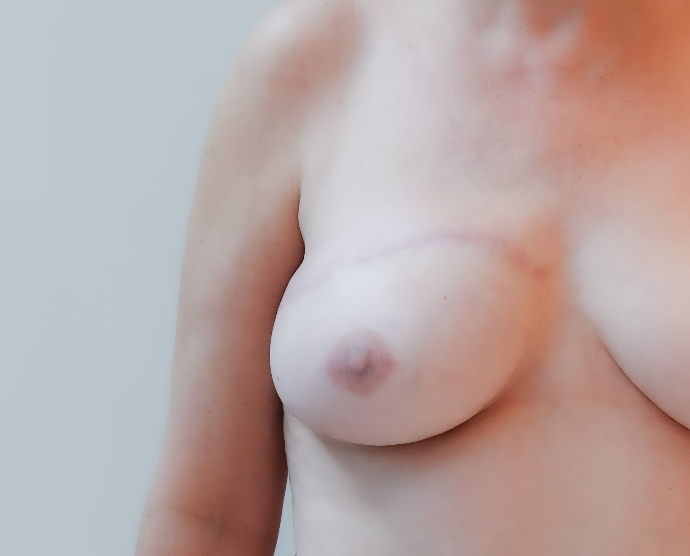
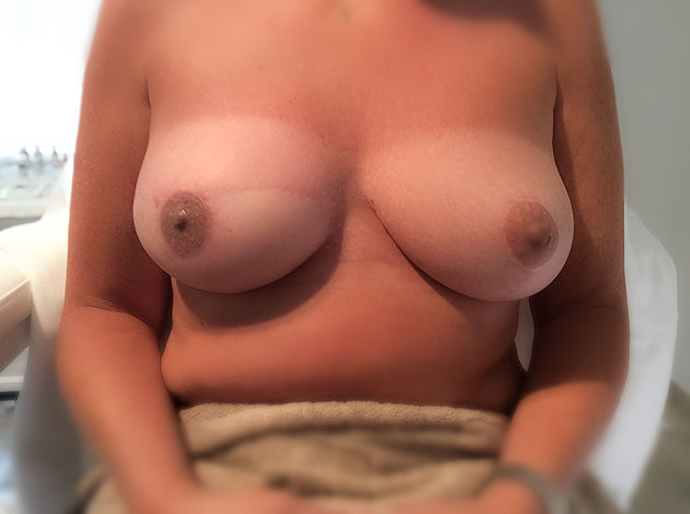
DIEP flap.
The DIEP flap consists solely of skin and fat tissue taken from the abdominal region. The abdominal muscles remain intact, which means that there will be no weakening of the abdominal wall after the operation. In addition, a blood vessel is removed that remains connected to the skin and fat tissue; this blood vessel is called a perforator. The removed skin and fat tissue is then transplanted to the chest area. The blood vessel in the DIEP flap is then connected (anastomosed) to the blood vessels running alongside the sternum.
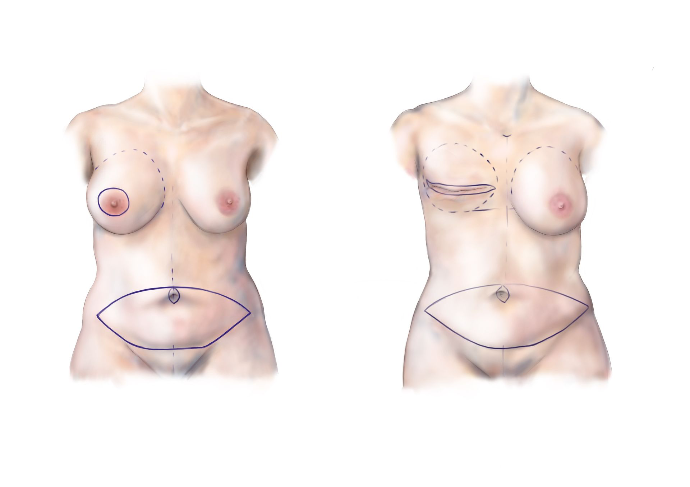
DIEP flap.
A immediate left breast reconstruction and a delayed left breast reconstruction in the photo. The DIEP flap consists of skin and fat tissue removed from the area below the navel.
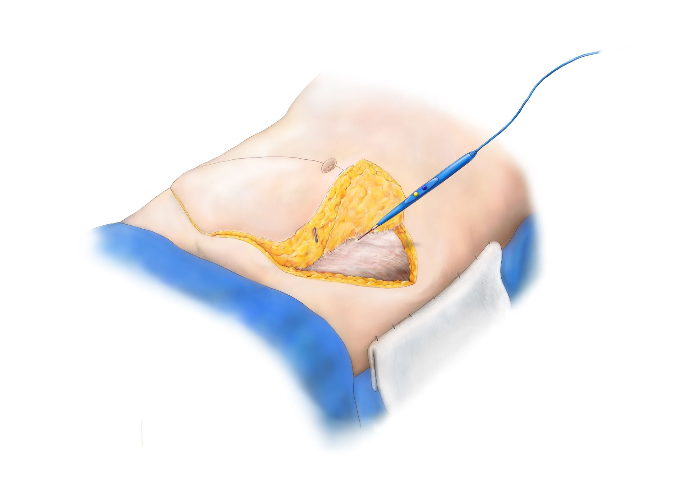
DIEP flap.
A DIEP flap consists of skin and fat tissue removed from the abdominal region (below the navel). The abdominal muscles are kept intact so that there is no weakening of the abdominal wall.
DIEP flap.
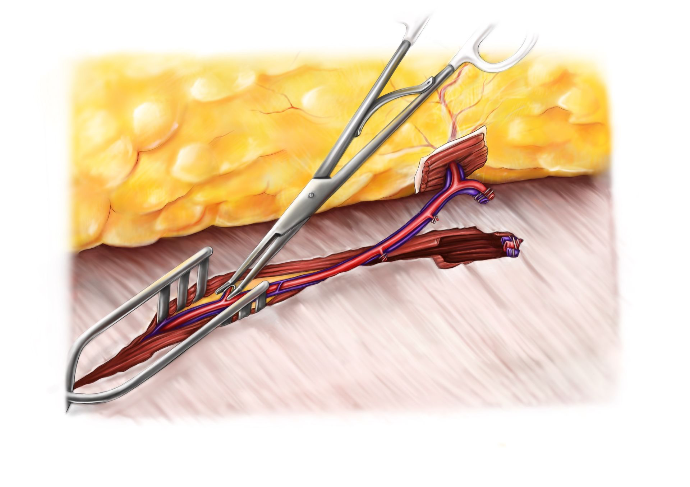
The surgeon locates a small blood vessel that runs through the membrane of the abdominal muscle. This blood vessel is called the perforator. The perforator is carefully exposed between the muscle while preserving the motor innervation of the muscle.
DIEP flap.
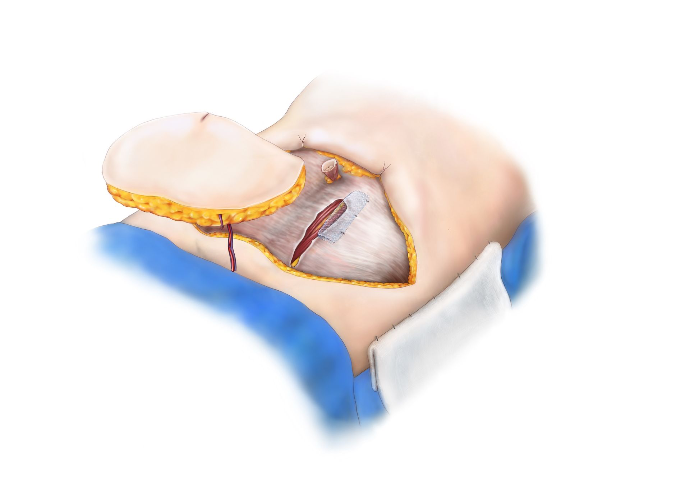
Once the blood vessel is fully exposed and isolated from the abdominal muscle, the entire "flap" is removed from the abdominal region. The DIEP flap thus consists of skin and fat tissue and an supplying (artery) and draining (vein) blood vessel.
DIEP flap.
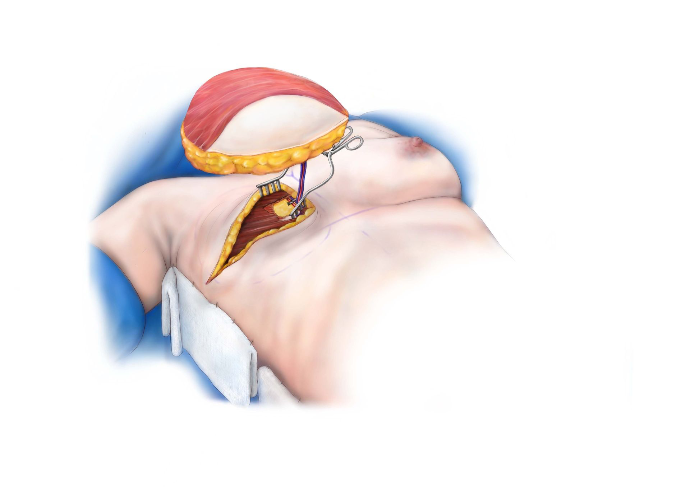
De "flap" wordt nu naar de borstkas gebracht waar de bloedvaten van de flap gehecht worden aan de bloedvaten die naast het borstbeen lopen. Dit gebeurt met microchirurgie en een operatiemicroscoop. Deze bloedvaten hebben een diameter van enkele millimeters.
DIEP flap.
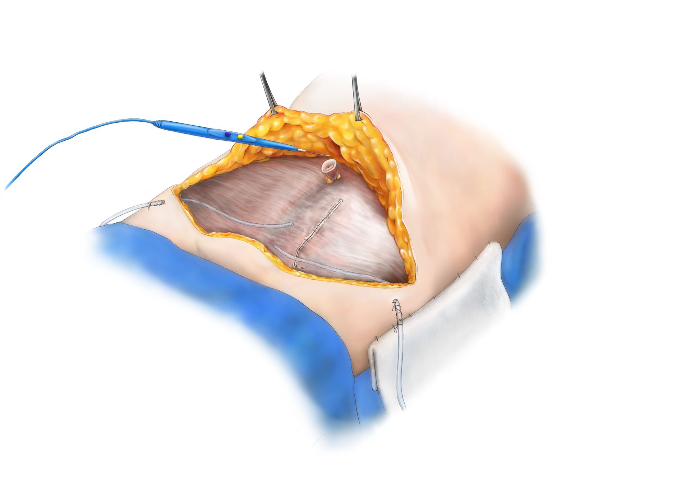
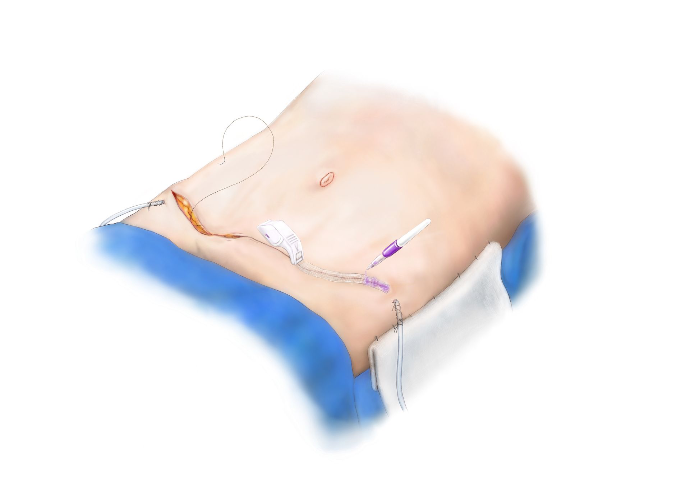
The abdomen is then closed with absorbable sutures. The navel remains connected to the abdominal wall. A small incision is then made through the skin to pull the navel through. Around the navel, there is then a scar. It is important to close the abdomen without tension; this is to avoid wound problems or discomfort after the procedure.
DIEP flap.
The operation ends with the neat closing of the abdomen and the nice shaping of the newly reconstructed breast. The wound sutures are stitched with dissolvable stitches that do not need to be removed. After the procedure, one must avoid heavier exertions for six weeks.
The following steps.
The first correction
After breast reconstruction, a waiting period of six months is observed before performing the first correction. The aim of this correction is to optimise the symmetry between both breasts. For this, the non-operated breast may sometimes need to be lifted or reduced. Additional corrections can also be carried out, such as adding volume to the reconstructed breast or correcting scars. Additionally, a correction is often performed at the level of the abdominal scar, or liposuction may take place in the abdominal region.
The second correction
In some cases, a second correction can be performed three months later; an additional remodelling. Usually, the new nipple is reconstructed, and often this can be done under local anaesthesia.
Nipple reconstruction.
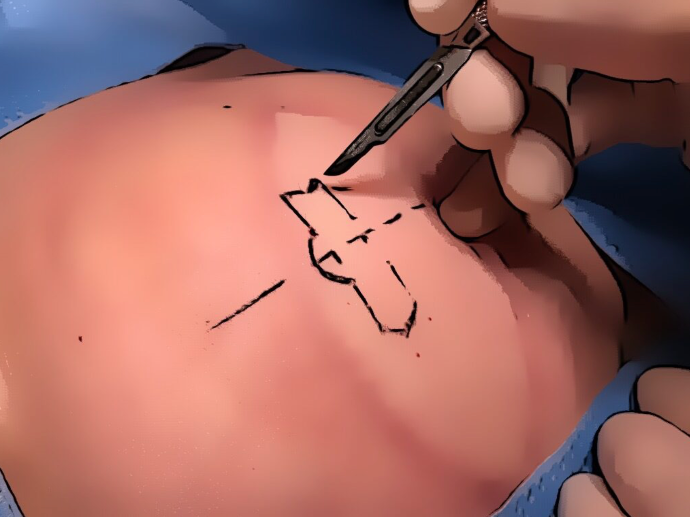
A frequent question is how a nipple reconstruction proceeds. In a nipple reconstruction, no tissue (or skin) is transplanted. The skin is cut according to a specific pattern cut
Nipple reconstruction.
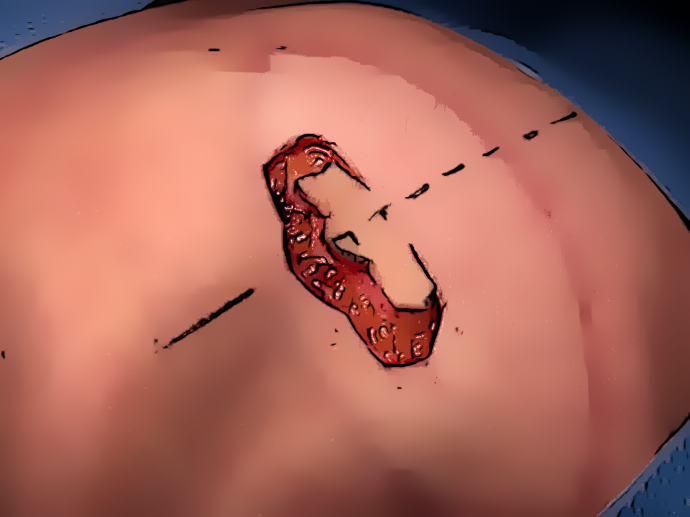
By cutting this pattern, three "skin flaps" are obtained that consist of skin and subcutaneous fat tissue
Nipple reconstruction.
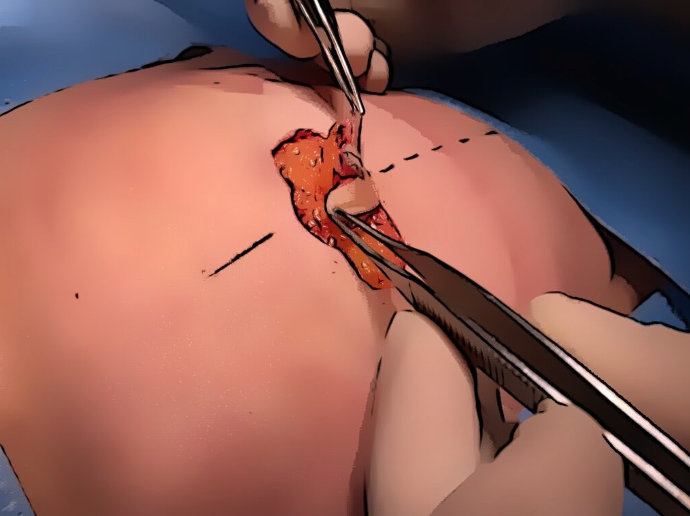
These "skin flaps" can now be mobilised and they can now be "folded together" to create the new nipple
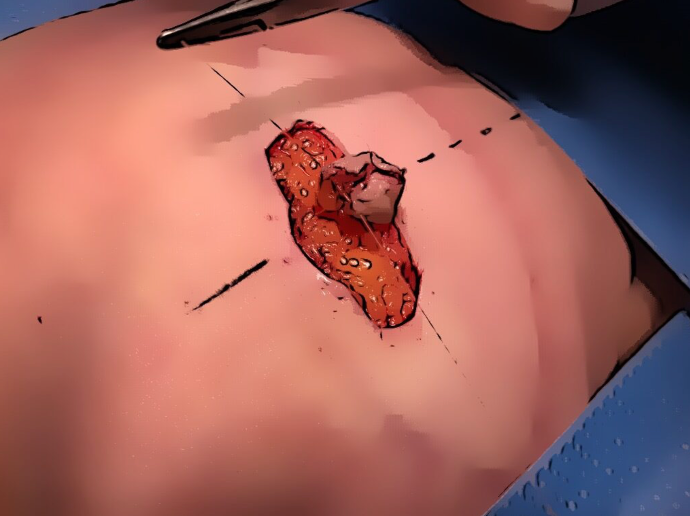
Nipple reconstruction.
The skin flaps are stitched together with a dissolvable suture, and in this way, a nipple is reconstructed. Everything is closed with an absorbable suture.
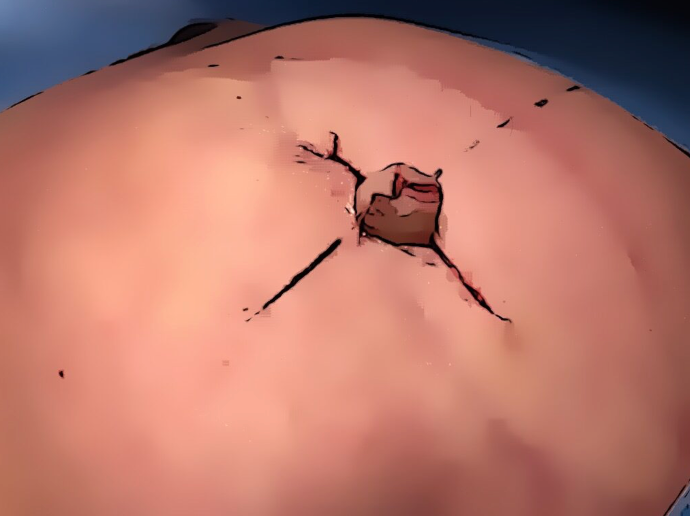
Nipple reconstruction.
After stitching all the skin flaps together, a new nipple can be seen emerging. The nipple may seem a bit large at first, but keep in mind that some volume will disappear as it will partially settle in the months to come.
Frequently Asked Questions
In the case of opting for the DIEP flap, an angio CT scan of the abdominal region is performed. This is done to map the blood vessels. It provides a clear view of the course of the blood vessels, the quality of the blood vessels, and also shows the location of the blood vessels. This facilitates the procedure and effectively gives the surgeon a "map" of the anatomy.

The hospital stay is typically four to five days. The first night after the procedure, patients remain in the intensive care unit (ICU). The reason for this is not that it is a major procedure, but because the blood flow to the new breast can be monitored regularly (every hour) in the ICU. Most revisions occur within six hours after the procedure. The ICU is located close to the operating theatre, and in case of doubt, immediate intervention can be made.
The recovery afterwards takes six weeks. This means six weeks of relative rest. It is best to avoid lifting heavy weights over 10 kg, as well as to avoid intensive sports activities and driving for two weeks.
The scar is located low in the abdominal region and around the navel. We try to place the scar as low as possible, and this depends on the laxity of the tissues. It is important not to put too much tension on the scar. If this is the case, we place the scar a bit higher and correct it at a later stage.
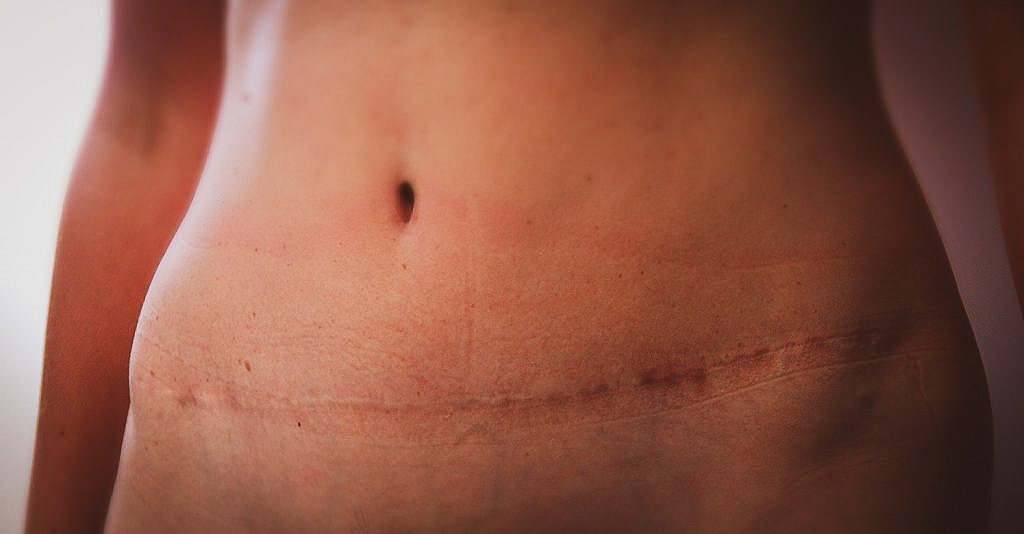
You wear a support bra for three weeks and you may shower daily (no baths). After being discharged from the hospital, you will receive a prescription for injections to prevent phlebitis for a week. Special ointments or dressings for wound healing are not necessary.
A breast reconstruction with a DIEP flap is a safe procedure. The surgeon involved must have the necessary experience in microsurgery. First and foremost, your health and lifestyle are important. Smoking is absolutely out of the question and can lead to the death of the new breast, significant wound problems, difficult healing, or long rehabilitation. The death of the new breast occurs in approximately 1% of cases. Causes of this include thrombosis or blood clot formation in the blood vessels that supply blood to the new breast. The reason for thrombosis can be technical (difficult anastomosis of the blood vessels or damage caused to the blood vessels) or the formation of blood clots in the blood vessels due to clotting problems or low blood pressures.
Other complications may include: hardened areas in the new breast due to fat necrosis (the death of part of the DIEP flap due to inadequate blood supply related to anatomy), poor wound healing in the abdominal region (due to tension, infection, or blood accumulation), poor wound healing of the new breast (due to infection or previous radiation of the breast), or the formation of distorted scars (hypertrophy).
A weakening of the abdominal wall occurs very rarely in principle, as the innervation of the abdominal muscles is left intact.
After the procedure, you should respect six weeks of relative rest. Avoid intense sports, but walking is allowed. Do not put pressure on the chest by lifting heavy weights, and wear your support bra to support the new breast. You can shower daily, but avoid taking a bath until all wounds have healed nicely. It is best to avoid driving for the first three weeks after the procedure. Eat healthily, especially protein-rich foods that will promote recovery and wound healing.
Make an appointment now or ask your question.
Our medical team is happy to answer your questions, including those about treatments and fees.